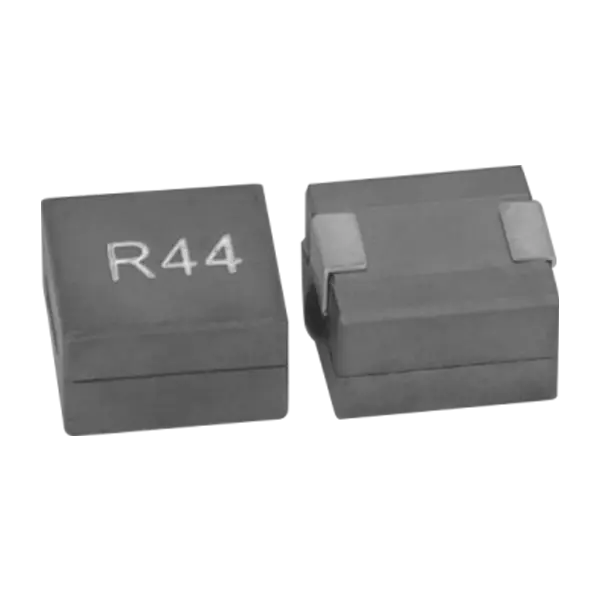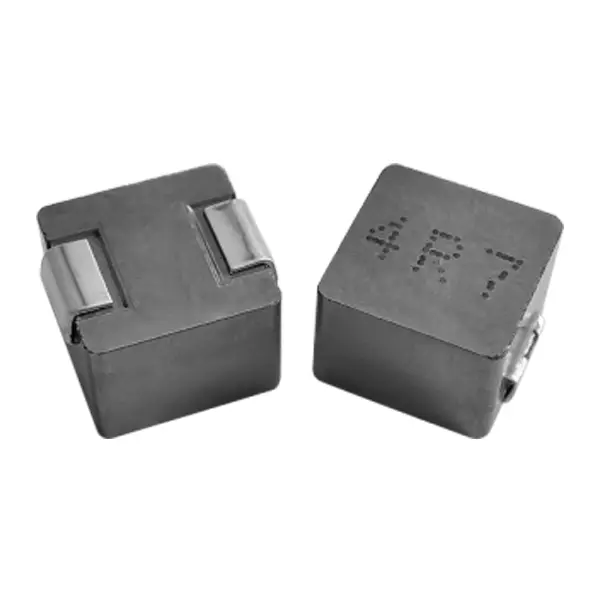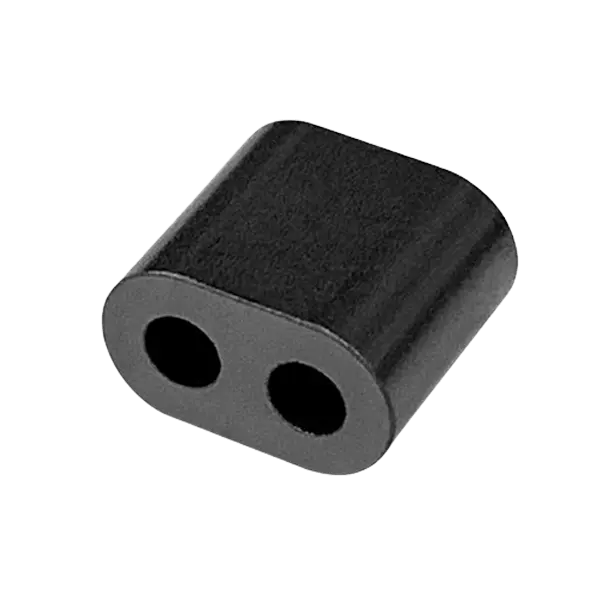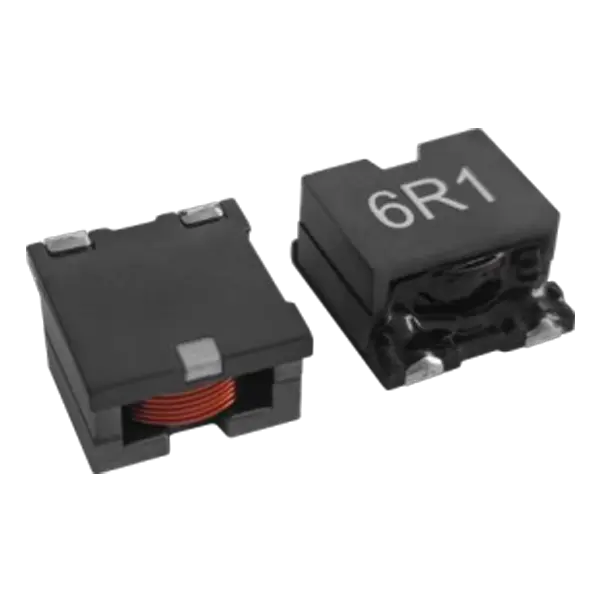


Inductors may be unassuming components, but they play a critical role in electronic circuits. In fields like power systems, telecommunications, and automotive electronics, the choice of iron core inductor directly impacts efficiency, stability, and reliability. With three mainstream core structures—toroidal, E-core, and pot-core—engineers often face the challenge of selecting the right one. This article will help you cut through the confusion and choose the best fit for your application.
Compared to air-core inductors, the key advantage of iron core inductors lies in their ability to achieve higher inductance in a smaller footprint. Core materials such as ferrite and silicon steel concentrate and enhance the magnetic field, enabling more efficient energy storage.
However, iron cores come with a trade-off: frequency sensitivity. Different core materials and structures are suited to vastly different frequency ranges. Choose wisely, and the inductor becomes an efficient "energy manager" for your system. Choose poorly, and it can become a performance bottleneck.
Understanding iron core inductors is ultimately about mastering the art of trade-offs—balancing high inductance, high efficiency, and frequency response.
Before diving deeper, here's a quick overview of the three core types:
| Type | Shape | Magnetic Path | EMI Performance | Typical Applications |
|---|---|---|---|---|
| Toroidal | Donut-shaped, winding covers the entire core | Closed magnetic path | Extremely low, minimal leakage | Power supplies, inverters, DC-DC converters |
| E-Core | "E"-shaped, winding on the center leg | Open or semi-closed path | Higher, may require shielding | Transformers, high-power supplies, filter circuits |
| Pot-Core | Cylindrical, winding fully enclosed | Closed magnetic path | Extremely low, excellent shielding | Communications, RF circuits, precision filters |
Each type has its strengths. Let's examine them one by one.
The toroidal inductor is likely the most familiar design. Its core is shaped like a ring, with the winding evenly distributed around the entire circumference, creating a closed magnetic path.
Why is it ideal for power applications?
Extremely low EMI: The toroidal structure confines the magnetic field within the core, making it an excellent choice for applications with strict EMI requirements.
High current handling: Toroidal cores offer good heat dissipation and can handle significant currents without saturating easily.
High efficiency: The closed magnetic path minimizes energy losses, particularly in the low-to-medium frequency range.
Typical roles include:
Output filters in switch-mode power supplies (SMPS)
Energy storage inductors in DC-DC converters
Filtering and energy storage in inverters
Uninterruptible power supplies (UPS)
If your application involves power conversion, EMI sensitivity, or moderate to high currents, the toroidal inductor is often the first choice.
E-core inductors get their name from the core's "E"-shaped profile. The winding is typically placed on the center leg. This design offers unique advantages in flexibility and power handling.
Why is it suited for high-power applications?
High inductance: E-cores can be made larger, providing ample space for windings to achieve high inductance values.
Excellent heat dissipation: The open structure allows heat to dissipate more effectively, making them suitable for continuous high-power operation.
Design flexibility: By combining different core sizes and bobbins, E-core designs can be quickly adapted to meet specific requirements for inductors or transformers.
Typical roles include:
High-frequency transformers
Filter inductors in high-power supplies
Power factor correction (PFC) circuits
Power conversion modules in industrial equipment
If your application demands high power, high inductance, and flexibility in design, the E-core inductor is a reliable choice. Keep in mind that EMI control is weaker than with toroidal designs, so additional shielding may be required.
The pot-core inductor resembles a cylindrical "pot." The winding is fully enclosed within the core, creating a nearly perfect closed magnetic path.
Why is it ideal for precision and communication applications?
Ultra-low EMI: Among the three types, pot-cores offer the best EMI control, making them indispensable in RF and sensitive signal circuits.
Excellent stability: The enclosed structure makes inductance values highly resistant to external magnetic interference and offers good temperature stability.
Compact footprint: For a given inductance value, pot-cores can be quite space-efficient.
Typical roles include:
Matching networks in RF circuits
Signal filters in communication equipment
Filter inductor in precision measurement instruments
Low-noise analog circuits
If your application involves communications, RF, precision signal processing, or extremely stringent EMI requirements, the pot-core inductor is often the optimal choice. However, its power handling capability is lower compared to toroidal or E-core designs, so it's not suitable for high-current applications.
Now that you understand the "personality" and "specialties" of each core type, let's put it all together with a simple decision framework.
Step 1: Identify Your Application Scenario
Power supplies, inverters, DC-DC converters → Start with toroidal
Transformers, high-power filtering → Start with E-core
Communications, RF, precision circuits → Start with pot-core
Step 2: Cross-Check Key Parameters
What is the operating frequency? (Toroidal and pot-core perform well at mid-to-high frequencies; E-core is better suited for low-to-mid frequencies.)
How high is the current? (High current applications favor toroidal or E-core designs.)
How strict are the EMI requirements? (Toroidal and pot-core are superior; E-core may require additional shielding.)
Is space constrained? (Toroidal and pot-core are generally more compact.)
Step 3: Validate and Test
Theoretical selection is only the starting point. Testing for temperature rise, saturation characteristics, and EMI performance in your actual circuit is essential to confirm the right fit.
Though small in size, iron core inductors carry significant weight in system stability and efficiency. Toroidal, E-core, and pot-core—there is no single "best" option, only the one that best fits your application. We hope this guide helps you make more confident, informed choices in your next design.
If you have custom inductor needs or would like to discuss a specific application, feel free to reach out.

This is the first one.


 English