English


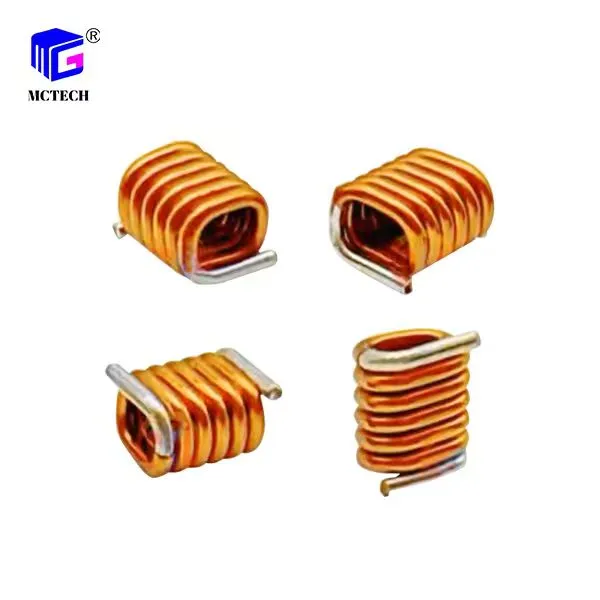
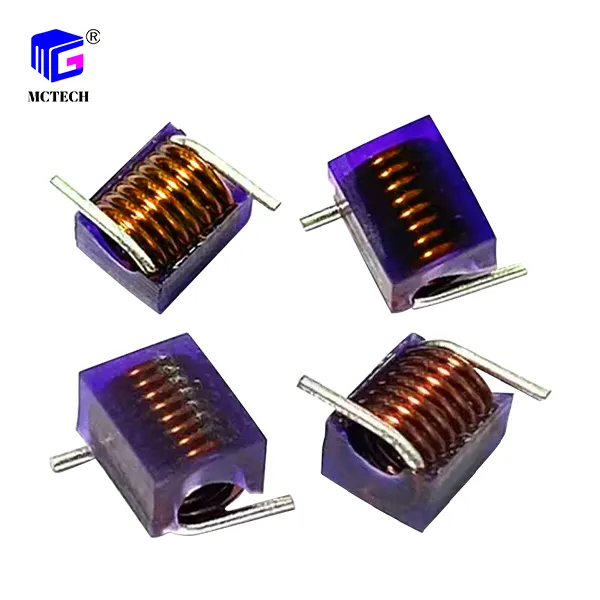
A ceramic core inductor is characterized by its small size, high Q value, excellent stability, high self-resonant frequency, precision, high-temperature resistance, and high reliability. These features make it particularly suitable for high-frequency circuits.
Application of a Ceramic Core Inductor
Coupling: In high-frequency circuits, it can couple the signal from one circuit to another, facilitating signal transmission and conversion. For instance, in the RF circuit of a mobile phone, it can couple the high-frequency signal received by the antenna to the RF chip for processing.
Resonance: It can form a resonant circuit with a capacitor, generating a specific resonant frequency. In wireless communication devices, this resonant circuit helps select specific communication channels, improving signal transmission quality and stability.
Choke: It exhibits high impedance for high-frequency signals, effectively preventing their passage and serving as a choke. In power supply circuits, it is used to filter out high-frequency noise, enhancing the stability of the power supply.
Consumer electronics manufacturers continuously refine inductor applications in daily life for better performance. For businesses seeking long-term solutions, partnering with professional inductor suppliers means access to durable, high-performance components.

Function of a Ceramic Core Inductor
Filtering: In circuits, it can work with a capacitor to form an LC filter circuit, removing AC ripple from the power supply and making the output DC voltage more stable. For example, in electronic devices that require high power supply stability, such as high-end audio equipment and medical devices, it can effectively filter out high-frequency noise, providing a clean DC power source.
Oscillation: A ceramic core inductor, in combination with a capacitor, can form a resonant circuit that generates oscillation signals at specific frequencies. In wireless communication devices, clock circuits, and other systems, the resonant frequency of the inductor and capacitor determines the frequency of the oscillation signal, providing stable clock or carrier signals for the equipment.
Waveform Transformation: By utilizing energy storage properties, it can convert one type of current or voltage waveform into another. For example, in pulse circuits, it can convert a DC power source into a pulse current, supplying the necessary pulse signal to other circuits.
Electromagnetic Interference (EMI) Suppression: It has a high self-resonant frequency and excellent electromagnetic shielding properties, making it effective at suppressing electromagnetic interference in circuits. In high-frequency circuits, it can prevent high-frequency signal leakage, reducing interference with other circuits. It can also prevent external high-frequency interference signals from entering the circuit, ensuring the proper operation of the system.
Energy Storage and Release: It can store electrical energy as magnetic energy and release it when needed. For example, in switch-mode power supply circuits, it can store electrical energy when the switching transistor is on and release the stored energy when the transistor turns off, providing a stable voltage to the load.
In conclusion, a ceramic core inductor plays an essential role in a wide range of electronic and power electronic systems. Its filtering, oscillation, electromagnetic interference suppression, waveform transformation, and energy storage functions make it indispensable in high-frequency applications, ensuring the reliable operation of various electronic devices.